
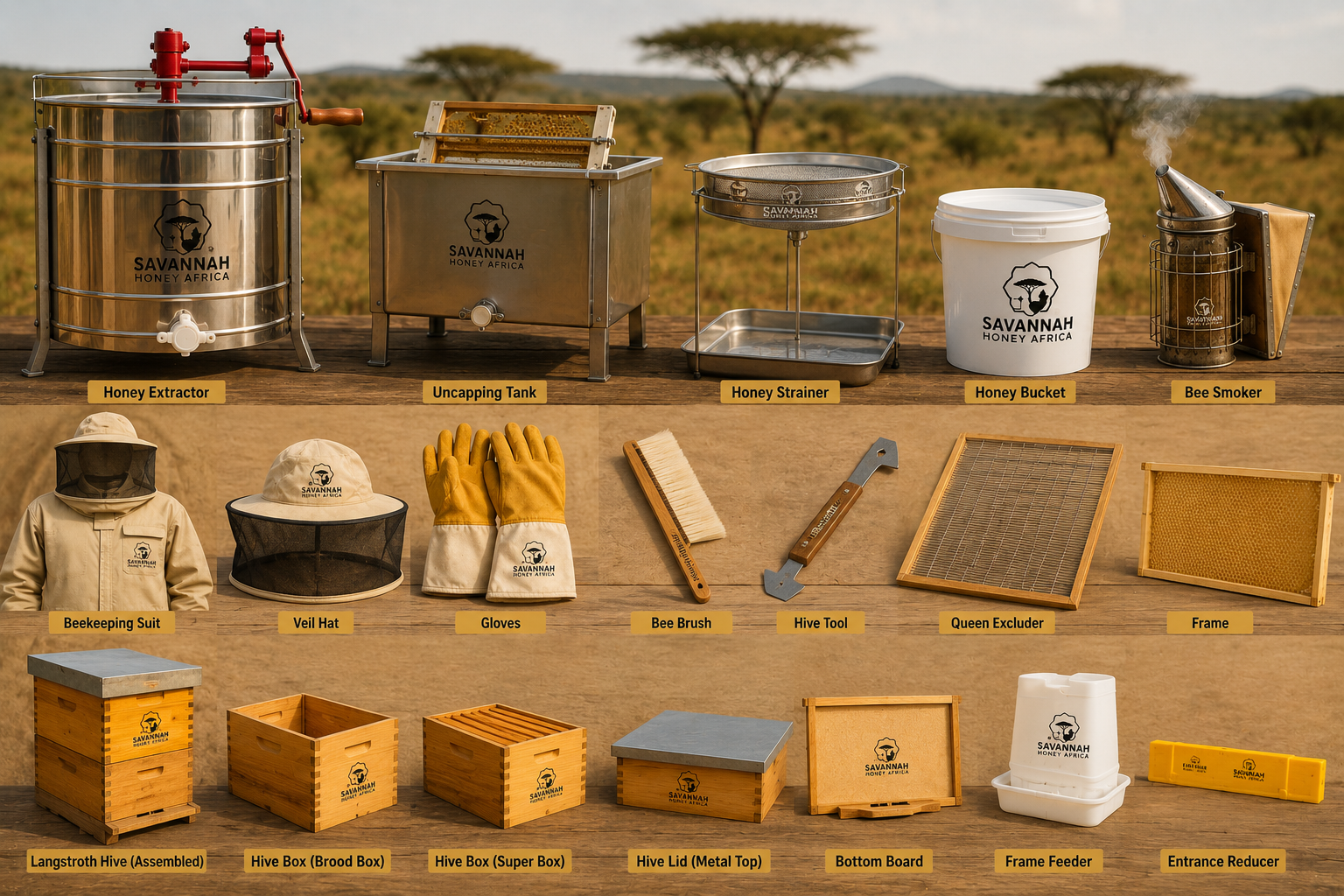

Introduction — What You Need to Know Before Buying Beekeeping Equipment in Kenya
If you’ve decided to start beekeeping in Kenya, the next step is buying equipment.
But this is where many beginners make costly mistakes.
Some overspend on unnecessary tools. Others buy cheap equipment that fails within months. The key is knowing what to buy, when to buy it, and what quality looks like.
This guide gives you a complete beekeeping equipment checklist in Kenya so you invest correctly from the start.
The Non-Negotiable Beekeeping Equipment You Must Have
1. Beehive (Langstroth Hive System)
Your beehive is the foundation of your apiary.
A complete Langstroth hive includes:
- Hive stand (keeps hive off the ground)
- Bottom board (floor with ventilation mesh)
- Brood box (main colony area)
- Frames (hold comb structure)
- Foundation sheets (guide comb building)
- Queen excluder (separates brood and honey zones)
- Honey super (where harvestable honey is stored)
- Inner cover (insulation layer)
- Outer cover (weather protection roof)
What to check for quality:
- Thick, kiln-dried timber (minimum 25mm)
- Tight, pest-proof joints
- Correct bee space (6–9mm)
- Standardized frame sizing
Price in Kenya:
KES 8,000 – 18,000 per complete hive setup
👉 Avoid extremely cheap hives — they often warp and fail quickly.
2. Protective Beekeeping Gear
Safety is essential in beekeeping.
You need:
- Full bee suit (cotton or poly-cotton)
- Protective veil (clear, strong mesh)
- Leather gloves or reinforced gloves
- Gumboots or sealed footwear
Why it matters:
Proper gear prevents injuries and builds confidence during hive inspections.
Price in Kenya:
KES 5,000 – 15,000
3. Bee Smoker
The smoker is used in every hive inspection.
Function:
- Produces cool smoke
- Calms bees during inspections
What to look for:
- Stainless steel body
- Durable bellows
- Heat protection shield
Price:
KES 1,500 – 4,000
4. Hive Tool
A small but essential tool used to:
- Open sealed hive parts
- Separate propolis-bound frames
Price:
KES 300 – 800
5. Bee Brush
Used to gently move bees during inspections or harvesting.
Price:
KES 500 – 1,000
Honey Harvesting Equipment (After Colonies Establish)
Once your bees are producing honey, you will need:
1. Uncapping Knife or Fork
Removes wax seals before extraction.
KES 3,000 – 8,000 (electric versions recommended for larger apiaries)
2. Honey Extractor
Spins honey out of frames without destroying comb.
- Manual extractor: KES 22,000 – 35,000
- Electric extractor: KES 35,000 – 60,000
3. Honey Settling Tank
Used to:
- Remove air bubbles
- Filter wax particles
- Improve honey clarity
KES 27,000 – 35,000
4. Honey Jars and Packaging
Important for branding and sales value.
👉 Glass jars improve perceived quality and pricing.
Optional Beekeeping Equipment (For Scaling Your Apiary)
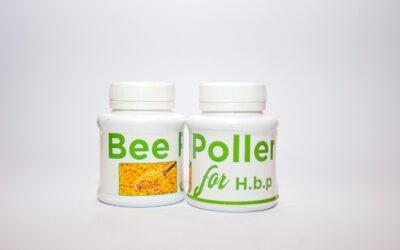
Pollen Trap
Collects bee pollen for extra income.
KES 2,000 – 5,000
Bee Venom Collector
Used for high-value bee venom production (advanced beekeeping).
KES 60,000 – 85,000
Queen Rearing Kit
Used to multiply colonies and increase apiary size.
Hive Feeder
Used during food-scarce seasons.
Hive Scale
Tracks hive weight for monitoring honey flow.
Where to Buy Beekeeping Equipment in Kenya
The Kenyan market has two main options:
General Hardware Stores
- Cheaper equipment
- Inconsistent quality
- Limited guidance
Specialist Beekeeping Suppliers
- Better build quality
- Expert guidance
- Training and support
Why Savannah Honey Africa is a Trusted Supplier
Savannah Honey Africa provides:
- Quality Langstroth hive systems
- Beekeeping tools and extraction equipment
- Training and mentorship
- Market linkage for honey sales
📍 Utawala, Nairobi (Off Eastern Bypass)
📞 +254 724 052 975
🌐 savannahhoneyafrica.com
Recommended Buying Sequence for Beginners
Step 1 — Get Training First
Understand beekeeping before buying anything.
Step 2 — Buy Hives and Protective Gear
These are your core investments.
Step 3 — Source Your Bee Colonies
Only after setup is ready.
Step 4 — Buy Harvesting Equipment Later
Only when your first harvest is near.
Step 5 — Add Advanced Equipment as You Scale
Such as pollen traps or venom collectors.
Final Thoughts — How to Avoid Wasting Money on Beekeeping Equipment in Kenya
The biggest mistake beginners make is buying equipment in the wrong order or choosing poor quality tools.
To succeed in beekeeping in Kenya, focus on:
- Quality over cheap price
- Proper training before buying
- Equipment that matches your future scale
👉 The right equipment, used correctly, turns beekeeping into a profitable and sustainable business.


0 Comments