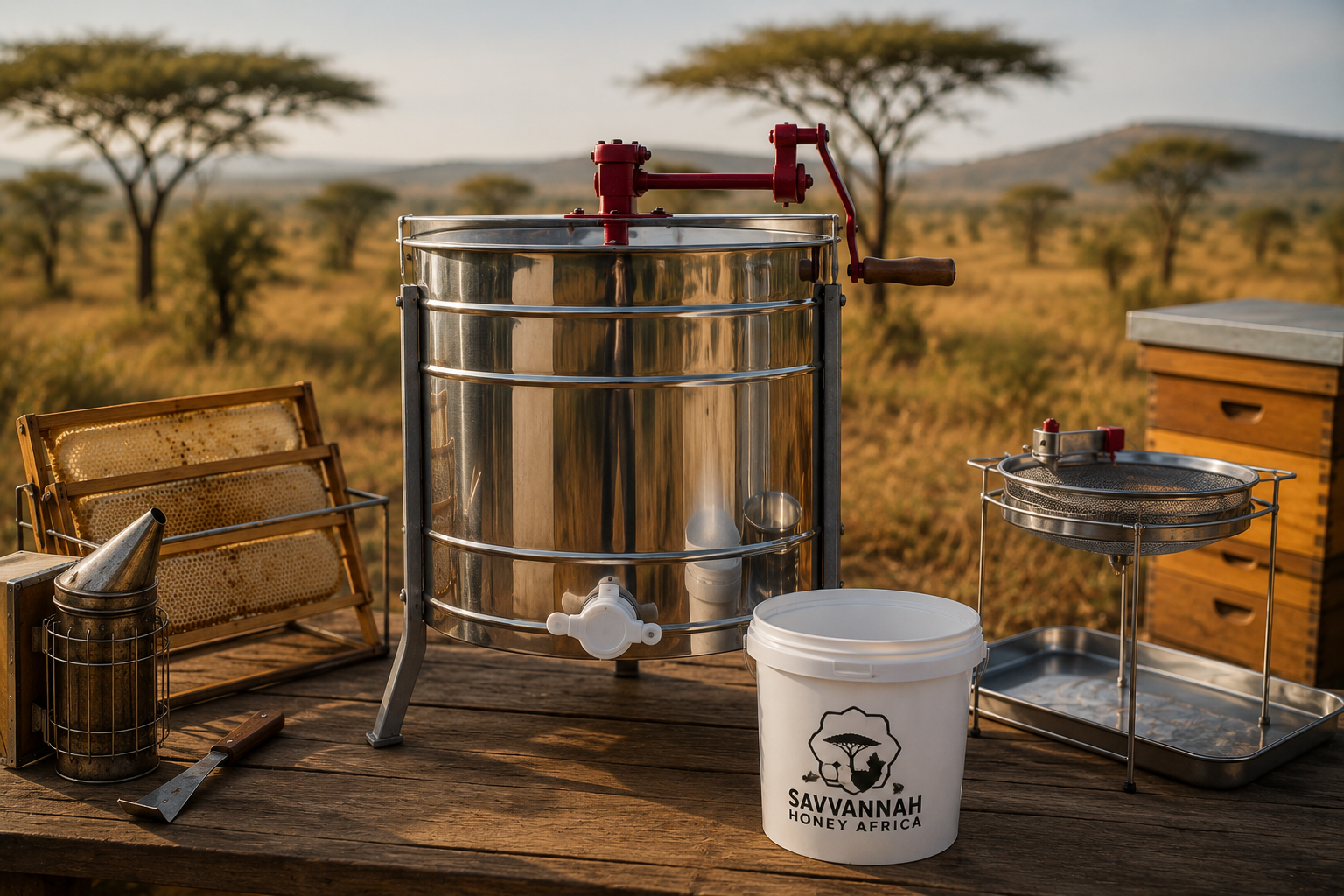
Honey Extractor in Kenya: Which Machine Do You Actually Need for Your Apiary Size?

Written by Kyalo Mutua

July 28, 2026

Introduction — Why Honey Extraction Matters in Beekeeping

If you’ve just harvested your first honey supers, you already know the excitement — heavy frames, capped honey, and the promise of income.

But the next step is critical:

👉 How you extract honey determines your profit, efficiency, and hive productivity.

Many beekeepers in Kenya lose money by:

  • Using the wrong extraction method
  • Destroying comb unnecessarily
  • Buying equipment that does not match their apiary size

This guide helps you choose the right honey extractor in Kenya based on your beekeeping scale.


Why Your Honey Extraction Method Matters

There are two main ways to extract honey:


1. Crush and Strain Method (Traditional)

This method involves:

  • Cutting comb from frames
  • Crushing it
  • Straining honey manually

Pros:

  • Very cheap
  • No equipment needed
  • Good for 1–2 hives

Cons:

  • Destroys comb every harvest
  • Bees must rebuild comb (wastes energy)
  • Lower long-term honey production

👉 Not suitable for commercial beekeeping in Kenya


 2. Centrifugal Honey Extraction (Modern Method)

This is the standard method for modern beekeeping businesses in Kenya.

How it works:

  • Uncap honey frames
  • Place in extractor
  • Spin to remove honey
  • Return intact frames to hive

Why it is better:

  • Saves comb (higher productivity)
  • Faster honey harvesting
  • Higher long-term yield
  • Professional-quality honey

Types of Honey Extractors in Kenya

 1. Manual Tangential Honey Extractor (2–3 Frame)

Best for:

Small beekeepers (up to 10 hives)

Price:

KES 20,000 – 35,000

Pros:

  • Affordable
  • No electricity needed

Cons:

  • Slow
  • Labour-intensive
  • Requires frame flipping

2. Manual Radial Honey Extractor (3–9 Frame)

Best for:

10–25 hives

Pros:

  • Faster than tangential
  • No need to flip frames
  • More efficient design

Cons:

  • Still manual
  • Can be tiring for large harvests

3. Electric Honey Extractor (3–9 Frame)

Best for:

20–100 hives (serious beekeepers)

Price:

KES 35,000 – 60,000

Pros:

  • Saves time and labour
  • Consistent extraction
  • Professional results

Cons:

  • Requires electricity or generator
  • Higher upfront cost

4. 3-Frame Professional Extractor (Electric)

Best for:

20–60 hive beekeepers

Price:

Around KES 45,000

Pros:

  • Stainless steel build
  • Balanced drum
  • Food-grade materials
  • Reliable for regular harvesting

 Other Essential Honey Processing Equipment

A honey extractor alone is not enough. You also need:


 1. Uncapping Knife or Fork

Removes wax caps before extraction.


2. Uncapping Tub

Collects wax and honey during processing.


3. Honey Settling Tank

Used to:

  • Remove air bubbles
  • Filter wax particles
  • Improve honey clarity

4. Honey Strainer

Filters fine wax and debris before bottling.


5. Honey Warmer

Used to liquefy crystallized honey for bottling.


 Honey Extractor Price Guide in Kenya (By Apiary Size)

Apiary Size Recommended Setup Estimated Cost
1–5 hives Crush & strain KES 2,000–5,000
5–15 hives Manual extractor setup KES 30,000–50,000
15–50 hives Electric extractor system KES 80,000–120,000
50+ hives Full commercial setup KES 150,000–250,000

How to Choose the Right Honey Extractor in Kenya

When buying a honey extractor, consider:

 1. Your Apiary Size

Buy for where you will be in 1–2 years, not today.

 2. Power Source

Choose manual or electric depending on your setup.

 3. Build Quality

Always prefer stainless steel, food-grade equipment.

H3: 4. Ease of Use

Faster extraction means better productivity.


 Common Mistakes Beekeepers Make

  • Buying too small equipment for growing apiaries
  • Choosing cheap low-quality steel extractors
  • Using crush-and-strain for commercial production
  • Not planning for future expansion

 Where to Buy Honey Extractors in Kenya

Savannah Honey Africa supplies professional honey extraction equipment in Kenya, including:

  • Manual extractors
  • Electric centrifugal extractors
  • Uncapping tools
  • Settling tanks
  • Honey warmers

📍 Utawala, Nairobi (Off Eastern Bypass)
📞 +254 724 052 975
🌐 savannahhoneyafrica.com


 Final Thoughts — Choosing the Right Honey Extractor in Kenya

The right honey extractor in Kenya depends on your apiary size, budget, and long-term goals.

  • Small beekeepers: manual systems are enough
  • Growing apiaries: electric extractors are ideal
  • Commercial beekeepers: full processing setup is essential

The key rule:

👉 Always buy for future scale, not current size

This ensures your beekeeping business grows smoothly without expensive upgrades too soon.

Author

You May Also Like…

0 Comments

Submit a Comment

Your email address will not be published. Required fields are marked *