Introduction — The Hidden Value Inside Your Beehives
Most Kenyan beekeepers are sitting on a high-value beekeeping product without realizing it — bee venom (apitoxin).
This natural substance, produced by honey bees during a sting, is one of the most expensive bee products in the world by weight. Yet most beekeepers in Kenya and Africa are not collecting it, meaning a major income stream is being left untapped.
While honey remains the main focus of beekeeping in Kenya, bee venom represents a new frontier in high-value bee products and modern apiculture income.
What Is Bee Venom (Apitoxin)?
Bee venom is a natural defensive secretion from the honey bee (Apis mellifera). It contains powerful bioactive compounds, including melittin, which makes up nearly 50% of its dry weight.
Key Components of Bee Venom
- Melittin (primary active compound)
- Enzymes
- Peptides
- Amino acids
Why Bee Venom Is Valuable
Research has explored bee venom for:
- Anti-inflammatory properties
- Potential anti-cancer activity
- Anti-viral effects
- Neurological research (Parkinson’s, MS studies)
- Cosmetic applications in premium skincare
This makes it highly valuable in:
- Pharmaceutical industries
- Cosmetic manufacturing
- Apitherapy products
How Much Is Bee Venom Worth in Kenya?
Bee venom is one of the most expensive bee products globally.
- Global price: USD 30–50 per gram
- Equivalent: KES 4,000–7,000 per gram
For comparison, bee venom can approach the value of gold by weight.
How Bee Venom Is Collected From Beehives
Bee venom collection does not harm the bees when done correctly.
Venom Collection Method
Modern beekeepers use a bee venom collector device, which includes:
- A glass plate system
- A low-voltage electric pulse (12V)
- Hive entrance placement
Step-by-Step Process
- Install venom collector at hive entrance
- Apply 12V electric pulse
- Bees sting glass surface
- Venom is deposited (without killing bees)
- Venom dries into crystals
- Scrape and collect powder
- Store in airtight glass containers
How Profitable Is Bee Venom in Kenya?
Bee venom can generate significant income when scaled properly.
Example Income Model
- 20 hives
- 0.2g venom per hive per session
- 10 sessions per month
👉 Total: 40g/month
At KES 5,000 per gram:
👉 Monthly income: KES 200,000
This is on top of honey production income, making bee venom a high-value secondary revenue stream in beekeeping.
Challenges of Bee Venom Production in Kenya
While profitable, bee venom is a specialist beekeeping product with strict requirements.
1. Strict Quality Standards
Pharmaceutical-grade buyers require:
- Pure, uncontaminated venom
- No wax or pollen contamination
- Proper drying and storage conditions
2. Certification Requirements
Export markets require:
- Lab testing
- Quality documentation
- Traceability systems
3. Market Access Limitations
Unlike honey, bee venom cannot be sold informally. You need:
- Verified buyers
- Laboratory validation
- Structured supply chains
Bee Venom Market Opportunities in Kenya and Africa
Kenya is emerging as a key player in bee venom production in Africa.
African honeybee species may have:
- Higher melittin concentration
- Unique biochemical properties
- Strong global demand potential
This positions Kenya as a potential exporter of high-value bee products.
Equipment Needed for Bee Venom Collection in Kenya
To start bee venom production, you need:
Essential Equipment
- Bee venom collector device (KES 60,000–85,000)
- 12V power source (battery or solar)
- Glass collection vials
- Sterile scraping tools
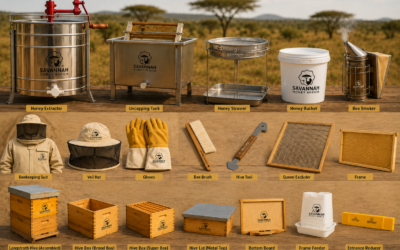
- Protective beekeeping gear
Training Requirements
- Correct timing of collection
- Safe handling procedures
- Storage and contamination control
- Quality assurance practices
Who Should Start Bee Venom Production?
Bee venom collection is not for every beekeeper.
It is best suited for those who:
- Already manage 15–20+ Langstroth hives
- Want to increase beekeeping income
- Can invest in specialist equipment
- Have access to structured buyers
- Focus on commercial beekeeping in Kenya
Risks and Considerations in Bee Venom Production
1. Quality Risk
Contamination can reduce product value or make it unsellable.
2. Market Dependency
Without verified buyers, bee venom has limited value.
3. Technical Handling
Improper collection can stress colonies or reduce output.
Getting Started With Bee Venom in Kenya
To begin:
- Start with a well-managed Langstroth apiary
- Invest in proper venom collection equipment
- Receive professional training
- Secure access to verified markets
Bee Venom Market Access in Kenya
Savannah Honey Africa provides:
- Bee venom collection equipment
- Training and technical support
- Access to structured bee venom buyers
- Market linkage for Kenyan beekeepers
📍 Utawala, Nairobi, Kenya
🌐 savannahhoneyafrica.com
Final Thoughts — The Future of Beekeeping in Kenya
Bee venom represents the next frontier of profitable beekeeping in Kenya and Africa.
While most beekeepers focus only on honey, those who diversify into bee venom are positioning themselves for significantly higher returns.
With proper training, equipment, and market access, bee venom can transform a traditional apiary into a high-income agribusiness enterprise.


0 Comments